
Find Water and Wastewater Equipment Faster
Built Water connects engineers and operators with curated, AI-generated equipment guides and local manufacturer reps. Understand your options, specify the right equipment, and make confident decisions.



Upflow clarifier using a suspended floc blanket and pulsing flow to filter particles from water in compact footprint.
Passive open-channel device measuring flow by creating a predictable relationship between upstream water level and discharge rate.
Binary sensors that detect flow presence or absence and trigger alarms or interlocks in water/wastewater systems.
Burns biosolids in a suspended bed of hot particles for efficient, lower-temperature combustion of municipal wastewater solids.
Large bottom-mounted gates that rapidly drain sedimentation basins to flush accumulated solids during maintenance cycles.
Instruments that measure mechanical loads on treatment equipment using strain gauges or load cells for process control and equipment protection.
Isolation valve that lifts a gate out of the flow path to provide full-bore, low-resistance on/off control.
Pressure vessel with fused glass interior lining that stores potable water while preventing corrosion in municipal systems.
Throttling valve that regulates flow by raising or lowering a plug perpendicular to the flow path.
Porous carbon media that removes dissolved organics and contaminants through adsorption onto its extensive internal surface area.
Continuously weighs and dispenses dry chemicals with real-time accuracy, ensuring precise dosing for critical treatment processes.
Continuously thickens wastewater sludge using gravity drainage through a moving porous belt with polymer conditioning.
Removes suspended solids using downward flow through granular media beds, driven by gravity rather than pressure pumps.
Passive gravity separator that captures fats, oils, and grease from wastewater to protect collection systems and treatment plants.
Catalytic filter media that oxidizes and removes dissolved iron and manganese from groundwater through manganese oxide coating.
Submersible sewage pump with cutting blades that macerate solids into fine slurry before discharge through small-diameter force mains.
Separates inorganic grit from organic material using inclined screw washing, reducing disposal costs and odor.
Removes organics from settled grit using an inclined screw and wash water to produce cleaner material for disposal.
Flexible plastic pipe joined by heat fusion for water, wastewater, and chemical conveyance in municipal systems.
Electric or fluid heating systems that prevent freezing and maintain temperatures in exposed pipes and equipment.
Rotating helical screw that continuously lifts floating oils, grease, and scum from clarifier surfaces into collection hoppers.
Corrosion-resistant piping with 40-75% nickel content for handling aggressive chemicals that attack standard stainless steel in treatment plants.
Gravity sand filters that polish secondary effluent by trapping solids at higher loading rates than conventional filters.
Graphical touchscreen interface that displays real-time plant data and allows operators to control equipment remotely.
Basin-style mixers that gently tumble coagulated water horizontally through chambers to build settleable floc particles before sedimentation.
Converts hydraulic pressure into powerful linear motion to operate large valves and gates in treatment plants.
Thermally destroys biosolids through high-temperature combustion, reducing volume by 90-95 percent while producing sterile ash for disposal.
Angled plates that multiply settling area within clarifiers, allowing higher treatment rates in smaller footprints.
Gravity separator using internal baffles to create turbulence zones that drop grit while keeping organics suspended in flow.
Centrifugal pump with collinear ports that mounts directly in pipelines, saving floor space for transfer and process applications.
Inline grinders shred rags and debris in wastewater pipes to protect pumps and downstream equipment from clogs.
Pipe-mounted mixing device with fixed internal elements that blend chemicals or fluids without moving parts or power.
Combines suspended and attached-growth bacteria in one aeration basin to boost treatment capacity without building new tanks.
Gravity-driven sand filtration system that treats wastewater in periodic doses, allowing biological treatment between applications.
Pressure vessels filled with resin beads that swap unwanted dissolved ions for acceptable ones through reversible chemical exchange.
Combines compressed air and pumped liquid through a nozzle to aerate and mix wastewater basins simultaneously.
Pumped liquid jets create mixing through high-velocity nozzles, eliminating submerged mechanical equipment in treatment basins.
Non-contact level measurement using laser beam reflection for precise liquid depth monitoring in tanks and channels.
Monitors pipes, tanks, and equipment for water loss using sensors that detect pressure changes, flow imbalances, or moisture presence.
Detects liquid at specific heights to automatically control pumps, valves, and alarms in tanks and wet wells.
Converts quicklime into usable hydrated lime slurry for softening, pH control, and phosphorus removal in treatment plants.
Temporary plugging device that isolates pressurized pipe sections for repairs without system-wide shutdown or draining.
Cryogenic storage tanks and vaporizers that supply high-purity gaseous oxygen for treatment processes requiring enhanced dissolved oxygen levels.
Sensors that convert weight into electrical signals for tracking chemical inventory and dosing rates in treatment applications.
Positive displacement pump using rotating lobes to gently transfer viscous sludge and biosolids without damaging solids or shearing polymers.
Cuts rags and debris into smaller particles to protect pumps and equipment in wastewater collection and treatment systems.
Non-contact level sensing using a magnetic float on a probe for accurate tank and wet well measurement.
Measures flow of conductive liquids using electromagnetic induction—no moving parts, ideal for water and wastewater applications.
Hand-operated valve control providing mechanical actuation without power for isolation and emergency backup applications.
Activated sludge treatment with membrane filtration replacing clarifiers, producing high-quality effluent in compact footprints for municipal wastewater plants.
Pressure-driven membrane filtration removing particles, bacteria, and turbidity for drinking water treatment and wastewater reuse applications.
Biological treatment using free-floating plastic carriers that support biofilm growth while circulating continuously through aerated or anoxic tanks.
Manual valves at basin bottoms that drain accumulated sludge and sediment during periodic maintenance cleanouts.
Thermal desalination process that reuses evaporation energy across multiple vessels to produce high-purity water efficiently from saline or contaminated sources.
Centrifugal pump with multiple impellers stacked in series to generate high pressure for elevated storage and membrane systems.
Thermal desalination process that flashes heated seawater through multiple low-pressure chambers to produce high-purity distilled water.
Membrane filtration technology removing hardness, organics, and select contaminants between ultrafiltration and reverse osmosis performance levels.
Non-contact level measurement using gamma radiation absorption, ideal for extreme conditions where contact instruments fail in municipal tanks.
Gravity-based system that removes free-floating oils and settleable solids from wastewater before discharge or downstream treatment.
Measures wastewater flow in open channels using level sensors and hydraulic equations to calculate flow rate continuously.
Reduces rags and debris in open wastewater channels using rotating cutters to protect downstream pumps and equipment.
Continuous-loop biological treatment system using mechanical aeration to remove organics and nutrients from municipal wastewater through extended contact time.
Generates ozone gas on-site to disinfect water through oxidation, providing powerful pathogen inactivation without chlorinated byproducts.
Produces ozone gas on-site using electrical discharge to disinfect water and oxidize contaminants through gas injection systems.
Pre-wired control panels integrating PLCs, HMIs, and power distribution to automate municipal treatment processes with factory testing.
Crystallizes calcium and magnesium onto sand pellets in upflow reactors to remove hardness from municipal water supplies.
Flat metal plates with precision holes that mechanically remove coarse solids from raw wastewater at headworks.
Automatically opens during pressure surges to protect pipelines and equipment, then closes when normal pressure returns.
Automatically opens to relieve pressure surges, then closes slowly using a pilot control system to prevent secondary water hammer events.
Elastomer sleeve valve that pinches shut to isolate abrasive slurries without metal-to-fluid contact in treatment plants.
Thermal barrier material wrapped around piping to control heat loss, prevent freezing, and reduce condensation in treatment plants.
Reciprocating pump using piston strokes to deliver chemicals and slurries at high pressure with precise flow control.
Hydraulic dewatering equipment that squeezes biosolids between filter plates to produce very dry cake in batch cycles.
Quarter-turn valve using rotating plug for tight on-off isolation in slurries, chemicals, and challenging municipal applications.
Positive displacement pump using a reciprocating plunger for high-pressure chemical dosing in treatment plants.
Converts compressed air into valve motion for automated control throughout water and wastewater treatment plants.
Enclosed pipeline systems that use air pressure or vacuum to transport dry bulk materials without manual handling or dust.
Corrosion-resistant plastic tanks for chemical and water storage in treatment plants, eliminating coating maintenance required by steel.
Dilutes and activates concentrated polymer, then meters it to treatment processes for effective solids separation and dewatering.
Thermoplastic storage vessels for chemicals and process water, offering corrosion resistance at lower cost than FRP or steel alternatives.
Submersible mixing units you deploy temporarily in tanks to prevent settling or blend chemicals without permanent installation.
Measures flow by trapping and counting fixed liquid volumes through mechanical chambers for high-accuracy custody transfer applications.
Factory-built concrete tanks delivered complete to your site for water storage, treatment basins, or pump stations.
Instruments that measure and display fluid pressure or activate controls when pressure reaches preset thresholds in treatment processes.
Measures liquid level by sensing hydrostatic pressure at tank bottom, converting pressure to level indication for wet wells and process tanks.
Enclosed steel vessels that filter water through media beds under pressure, offering compact footprints for smaller treatment plants.
Automatically reduces upstream pressure to a lower, steady downstream setpoint to protect equipment and distribution systems.
Spring-loaded safety device that automatically opens to discharge excess pressure and prevent catastrophic pipe or equipment failures.
Positive displacement pump using helical rotor inside elastomer stator to convey thick, abrasive slurries without pulsation.
Mechanical flow meter using a rotating propeller to measure clean water flow in treatment plant pipelines.
Fluoropolymer piping that resists chemical attack from aggressive treatment chemicals where standard materials fail rapidly.
Non-contact level measurement using microwave pulses to detect liquid or solid surfaces in tanks and basins.
Non-contact temperature sensor that measures surface heat by detecting infrared radiation from target objects.
Equipment that instantly disperses coagulant chemicals throughout water using high-intensity mixing before flocculation begins.
Centrifugal pump with impeller set back from flow path to handle solids-laden wastewater without clogging.
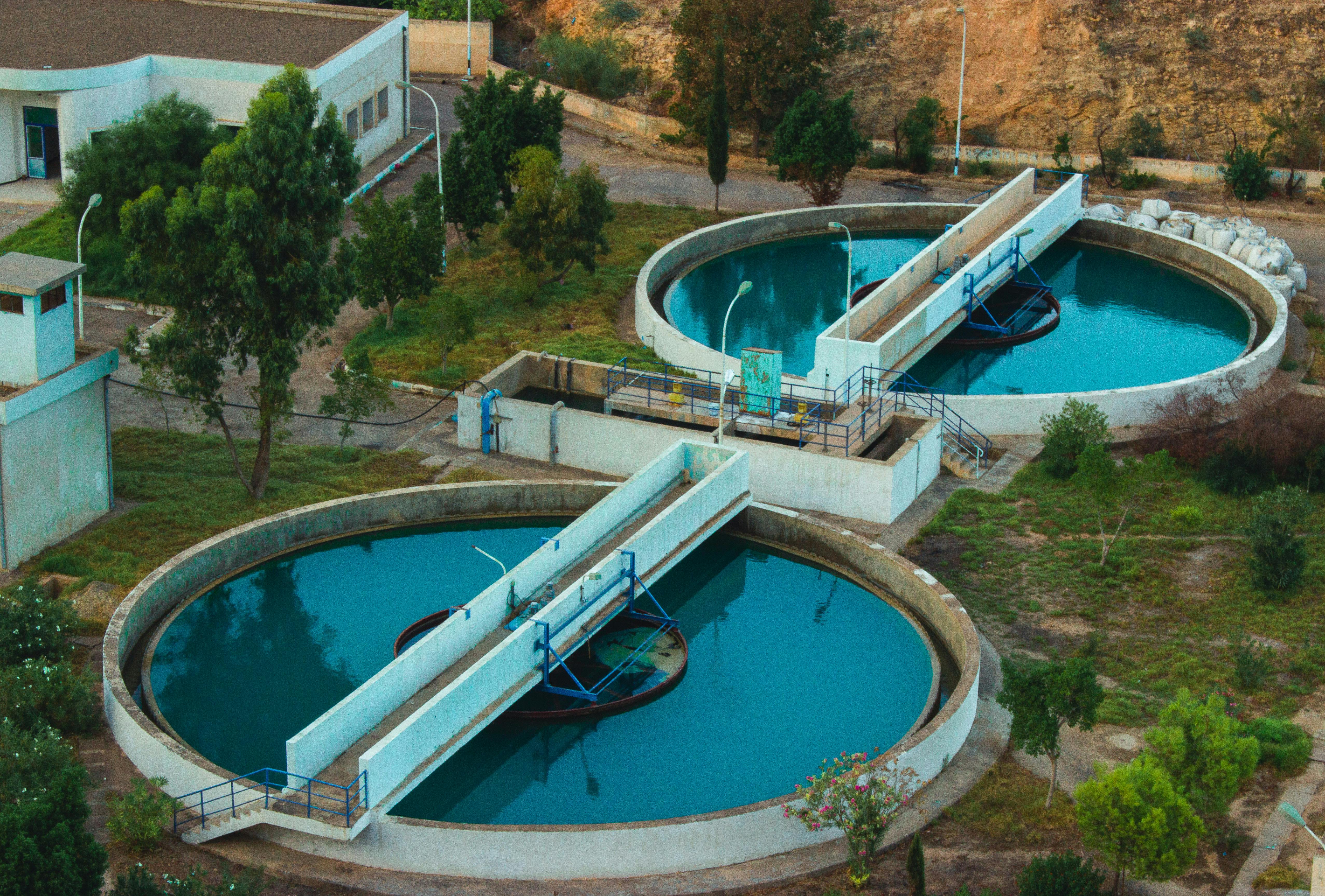
Gravity settling basins with traveling bridge mechanisms that separate suspended solids from water using horizontal flow and continuous sludge removal.
Compact air movers that build moderate pressure through regenerative impeller action for small-scale aeration and mixing applications.
Destroys odorous gases and VOCs from wastewater processes using high-temperature combustion with heat recovery through ceramic media beds.
Pressurized membrane system that removes dissolved solids and salts from water, producing high-purity permeate and concentrated reject.
Detects liquid and sludge levels using radio frequency signals that sense material contact with an immersed probe.