
Find Water and Wastewater Equipment Faster
Built Water connects engineers and operators with curated, AI-generated equipment guides and local manufacturer reps. Understand your options, specify the right equipment, and make confident decisions.



Removes sand and heavy inorganic solids from wastewater using controlled air diffusion to protect downstream equipment from abrasive damage.
Automatically releases trapped air from pipelines and admits air during draining to prevent vacuum collapse.
Supplies pressurized air for pneumatic valves, instrumentation, and aeration in water and wastewater treatment facilities.
Automatically vents small air volumes from pressurized pipelines during operation using a float-controlled orifice mechanism.
Self-actuating valve that fills elevated storage tanks to preset level, then closes to prevent overflow without external controls.
Lightweight, corrosion-resistant piping for water, wastewater, and chemical conveyance in treatment plants requiring reduced structural support.
Pressurized vessels using compressed air to maintain system pressure and reduce pump cycling in water distribution systems.
Welded aluminum vessels for chemical, water, and effluent storage in treatment plants where corrosion resistance and lightweight construction matter.
Meters and injects anhydrous ammonia gas to form chloramine disinfectant residual in drinking water distribution systems.
Quarter-turn or multi-turn valve with 90-degree flow path that redirects and controls flow in compact installations.
Maintains minimum backpressure to prevent destructive vapor bubbles from forming and collapsing inside pumps and piping systems.
Self-cleaning fabric filters that remove suspended solids through automated backwash cycles without operator intervention or process shutdown.
Self-cleaning screens that continuously remove debris from process streams to protect downstream equipment in water and wastewater plants.
High-flow, low-head pump using propeller impeller to move large water volumes axially through municipal intake and discharge systems.
Mechanical assemblies that prevent contaminated water from reversing into potable supply under backpressure or backsiphonage conditions.
Self-regulating valve that maintains minimum downstream pressure by throttling flow when pressure drops below setpoint.
Pressure vessels with replaceable fabric bags that capture suspended solids from water flowing through the bag material.
Quarter-turn valve using a rotating ball for reliable on-off isolation in clean water and chemical applications.
Continuous-belt mechanical screens that remove coarse solids from raw wastewater to protect downstream equipment from clogging and damage.
Moves dewatered biosolids and screenings on continuous belts between treatment processes, bins, or loading areas.
Continuous dewatering system that squeezes water from biosolids between two tensioned fabric belts passing through compression rollers.
Vertical packed-bed reactors using biofilm and upward air flow to remove organics and ammonia from wastewater.
Copper-zinc alloy piping for small-diameter water service lines and instrument connections requiring corrosion resistance and easy threading.
Corrosion-resistant copper-tin alloy piping for potable water systems, chemical feeds, and equipment connections requiring galvanic compatibility.
Non-contact level measurement using air pressure in a submerged tube to determine liquid depth in tanks and wet wells.
Conveys screenings, grit, or biosolids vertically using buckets on a belt or chain for efficient headworks material handling.
Rotating disc valve for flow isolation and throttling in water/wastewater pipelines and channels, offering compact installation and quick operation.
Quarter-turn valve using a rotating disk for flow control and shutoff in water and wastewater piping systems.
Measures liquid level by detecting capacitance changes when material contacts a probe—continuous or point detection available.
Injects carbon dioxide gas into water to safely lower pH for corrosion control and distribution system stability.
Pressure vessels with replaceable cartridges that trap particles to polish treated water or protect downstream equipment.
Cast iron vessels that store pressurized water to maintain system pressure and reduce pump cycling in distribution systems.
Automated bar screen using chain-mounted bars following a curved path to remove large debris from deep wastewater channels.
Electrochemical system that prevents metal corrosion in tanks, pipes, and structures by applying protective electrical current.
Rotating impeller machines that deliver large air volumes at moderate pressures for biological aeration and process air needs.
Composite pipe manufactured by spinning layers of fiberglass and mortar for corrosion-resistant conveyance in municipal water systems.
Mechanical system using continuous chain-driven buckets to scrape and remove settled grit from rectangular or circular tanks.
Rectangular channel system using continuous chain-driven flights to scrape settled grit toward a discharge hopper for removal.
Continuous chain-driven system that pushes floating grease, scum, and oils from clarifier surfaces to collection points.
Mechanized bar screen using continuous chain-driven rakes to remove debris from wastewater before downstream processes.
Wastewater pump with open-channel impeller that passes solids and stringy debris without clogging in lift stations.
Generates chlorine dioxide disinfectant on-site by mixing precursor chemicals in a controlled reaction vessel for water treatment.
Vacuum-based system that meters chlorine gas from pressurized containers into water streams for disinfection and oxidation.
Centrifugal pump with inlet cutting blades that shred rags and debris to prevent clogging in raw sewage applications.
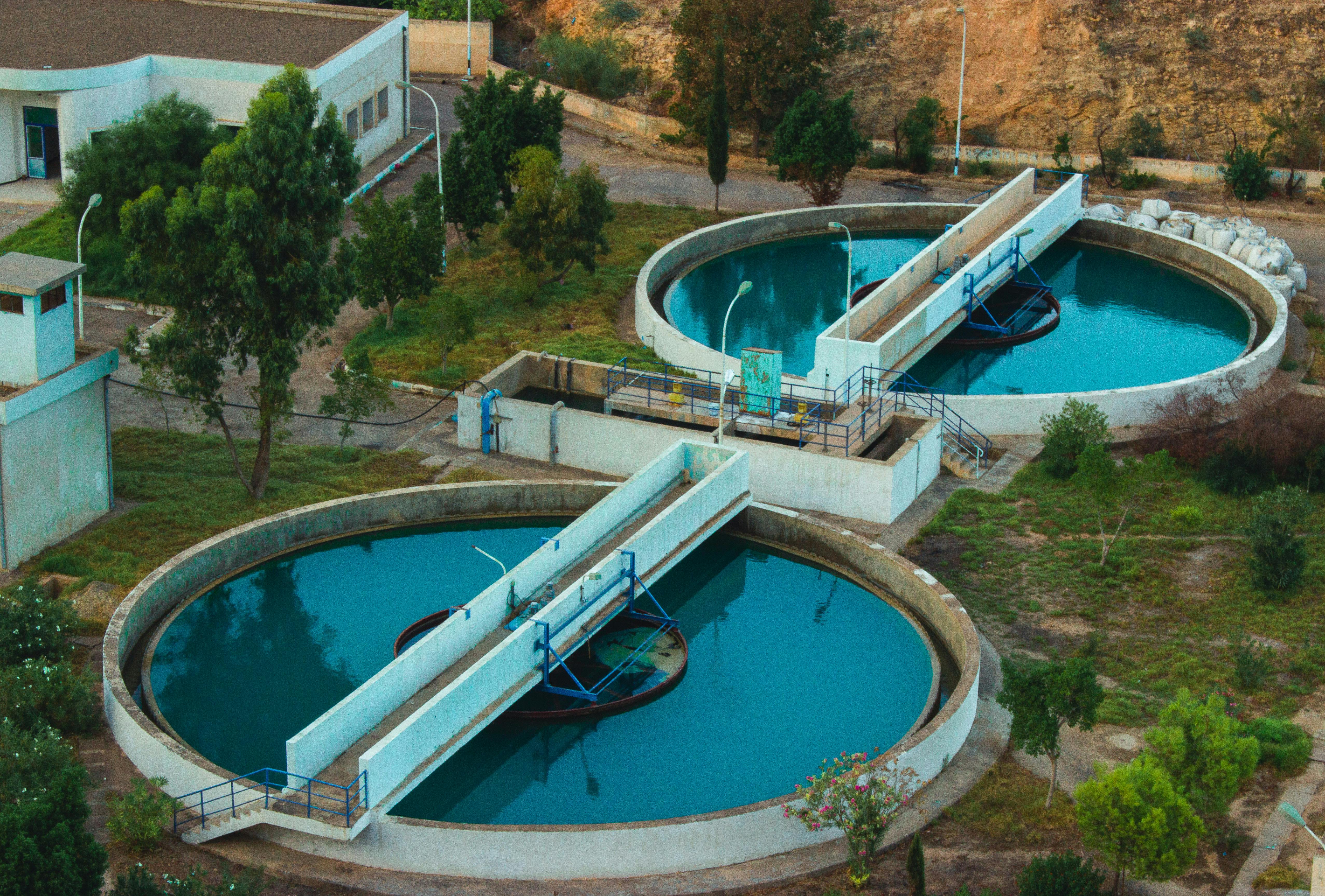
Round settling tanks using gravity and slow rotation to separate solids from water in municipal treatment plants.
Concentrates dilute sludge through gravity settling in a circular tank, reducing volumes for downstream processing equipment.
Mechanized rake travels vertically up fixed bars to remove debris from wastewater channels in deeper applications.
Aeration devices that create large bubbles for mixing and oxygen transfer in wastewater basins with minimal maintenance requirements.
Barrier systems that isolate buried or submerged metal infrastructure from corrosive soil and water environments.
Releases large air volumes during pipeline filling/draining and vents accumulated air pockets during pressurized operation.
Rotating cutting device that shreds solids in raw wastewater channels to protect pumps and downstream equipment.
Precast cylindrical pipe using reinforced concrete to convey water and wastewater through gravity or low-pressure municipal systems.
Throttling valve using conical plug design for reliable flow control in slurry and solids-laden municipal applications.
Automated screening system using a continuous moving belt to capture and remove debris from wastewater or raw water flows.
Metallic piping for potable water distribution, chemical feed lines, and instrumentation in treatment plants.
Measures mass flow, density, and temperature using vibrating tubes that twist proportionally to fluid mass passing through.
Removes grit from wastewater using centrifugal force in a conical chamber with no moving mechanical parts.
Rotating drum screen that captures wastewater debris on exterior surface, self-cleans continuously with spray wash.
Biological filters that use bacteria and a carbon source to convert nitrate in drinking water into harmless nitrogen gas.
High-speed rotating equipment that separates solids from wastewater sludge to produce semi-solid cake for disposal.
Continuously compresses biosolids through a rotating screw and screen to produce dewatered cake for disposal or beneficial reuse.
Self-priming pump using compressed air to flex diaphragms that move liquids without seals or electric motors.
Positive displacement pump using hydraulic oil to flex a diaphragm for accurate, leak-free chemical dosing in treatment plants.
Protects pressure instruments from corrosive or viscous media using a flexible diaphragm and hydraulic fill fluid.
Flexible diaphragm presses against seat to control corrosive or abrasive flows without fluid contacting metal components.
Measures flow by detecting pressure drop across a restriction; proven technology for clean water with no moving parts.
Spring-loaded valve that automatically opens to relieve destructive pressure surges in pipelines without external controls or power.
Tertiary filters using rotating cloth-covered discs to remove suspended solids and phosphorus from secondary wastewater effluent.
Rotating disc screens that capture suspended solids and debris from wastewater through adjustable spacing between mounted discs.
Rotary filter discs that concentrate dilute sludge by removing water through gravity drainage and media filtration.
Flotation system using pressurized microbubbles to float solids to the surface for removal in water treatment plants.
Non-invasive flow measurement using ultrasonic frequency shifts from particles in wastewater and sludge applications.
Spring-loaded valve with two hinged discs that prevent backflow and close rapidly to minimize water hammer in pumping systems.
Enclosed conveyor using chain-mounted flights to drag screenings, grit, or biosolids through a trough with minimal spillage.
Mounts on 55-gallon drums to transfer liquid chemicals directly into treatment processes without separate storage tanks.
Transfers chemicals and polymers directly from drums and totes into treatment processes without bulk storage tanks.
Vertical vessels storing bulk powdered treatment chemicals with controlled discharge for automated chemical feed systems at water/wastewater plants.
Pumps that remove drainage water from below-grade sumps while remaining accessible in a separate dry chamber for maintenance.
Automated equipment that wets, activates, and delivers powdered polymer for water and wastewater treatment applications.
Flexible elastomer check valve that seals backflow using a duck-bill shaped sleeve; ideal for solids-laden applications.
Pressure-rated iron pipe for water and wastewater conveyance, offering durability and flexibility in municipal distribution systems.
Pressurized vessels using compressed air to maintain system pressure, reduce pump cycling, and provide emergency water supply.
Electrically powered devices that position valves and gates with precise control and feedback in treatment plants.
Membrane-based desalination using electrical current to selectively remove dissolved salts from brackish water through ion-exchange membranes.
Automatically opens before pump shutdown to prevent water hammer by gradually decelerating flow through pilot-operated control and electronic signaling from pump control systems.
Electrically-actuated valve that closes before pump shutdown to prevent destructive pressure surges in wastewater force mains.
Captures and neutralizes toxic gas releases from chlorine, ammonia, or ozone equipment failures using chemical scrubbers.
Single-stage pump that draws fluid axially through one end and discharges radially, commonly used for general water transfer applications.
Corrosion-resistant composite pipe using glass fibers and resin for water, wastewater, and chemical conveyance in municipal applications.
Lightweight pressure vessels that maintain distribution system pressure between pump cycles using compressed air and bladder separation technology.
Composite tanks storing chemicals or water using corrosion-resistant fiberglass-resin construction for municipal treatment applications.
Submerged diffusers that release tiny air bubbles to efficiently dissolve oxygen for biological wastewater treatment processes.
Motor-driven impellers mounted at fixed positions that transfer atmospheric oxygen into wastewater through surface turbulence and mixing.
Gravity-operated check valve that prevents backflow at outfalls using a hinged gate that opens with forward flow.
Elastic membranes that release fine air bubbles for efficient oxygen transfer in activated sludge and aeration basins.
Continuous-loop screening system using flexible metal bars to remove coarse debris from raw wastewater channels.
Surface-mounted aerators that spray water into the air to transfer oxygen in lagoons and oxidation basins.
Surface-mounted mixers that float on pontoons to circulate large basins where fixed installations aren't practical.
Surface-mounted device that continuously removes oils, grease, and floating solids from clarifiers and lagoons while adjusting to water level changes.
Mechanical device using buoyancy to automatically open or close valves for simple tank level control.